Grace under pressure
When my robot's code froze mid-run at the World Robot Olympiad Singapore 2025, I diagnosed the fault, swapped the hub, and re-ran to win Bronze. I don't panic when things break — I debug.
DSA 2026 · Robotics Talent Area
Robotics Builder · Spike Programmer · Bronze Medallist
I'm a 12-year-old Primary 6 student who builds and codes robots — and stays calm when they break. Two years of training, a competition medal, a self-built walking robot, and the confidence to explain it all.

What Sets Me Apart
When my robot's code froze mid-run at the World Robot Olympiad Singapore 2025, I diagnosed the fault, swapped the hub, and re-ran to win Bronze. I don't panic when things break — I debug.
Outside of class, I built and coded my own four-legged walking robot at home, inspired by Boston Dynamics' Spot. Robotics is my hobby, not just my lesson.
I've trained in public speaking since 2023 and competed nationally. I can present my work clearly and confidently — a rare pairing with hands-on robotics skill.
Signature Achievement
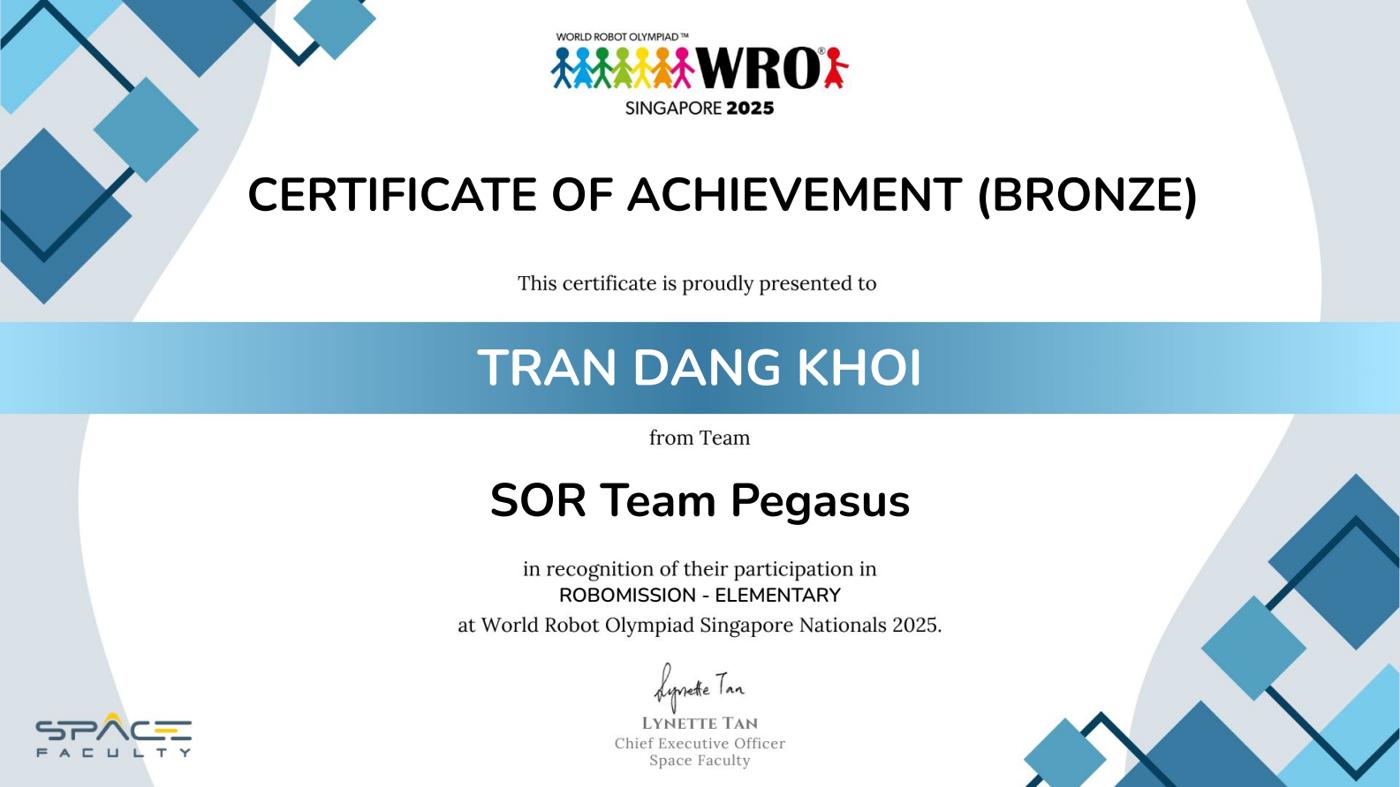 Bronze Award
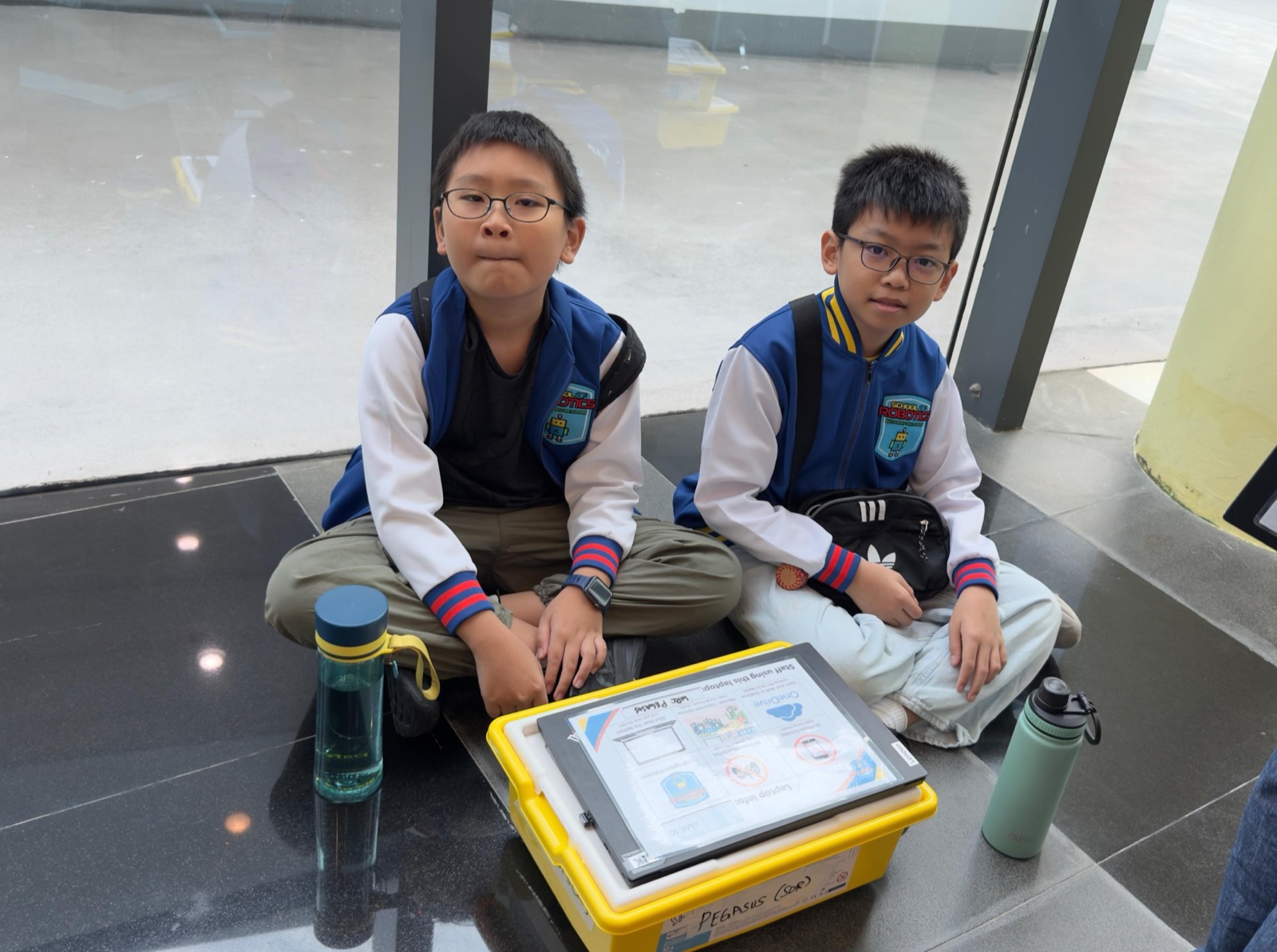
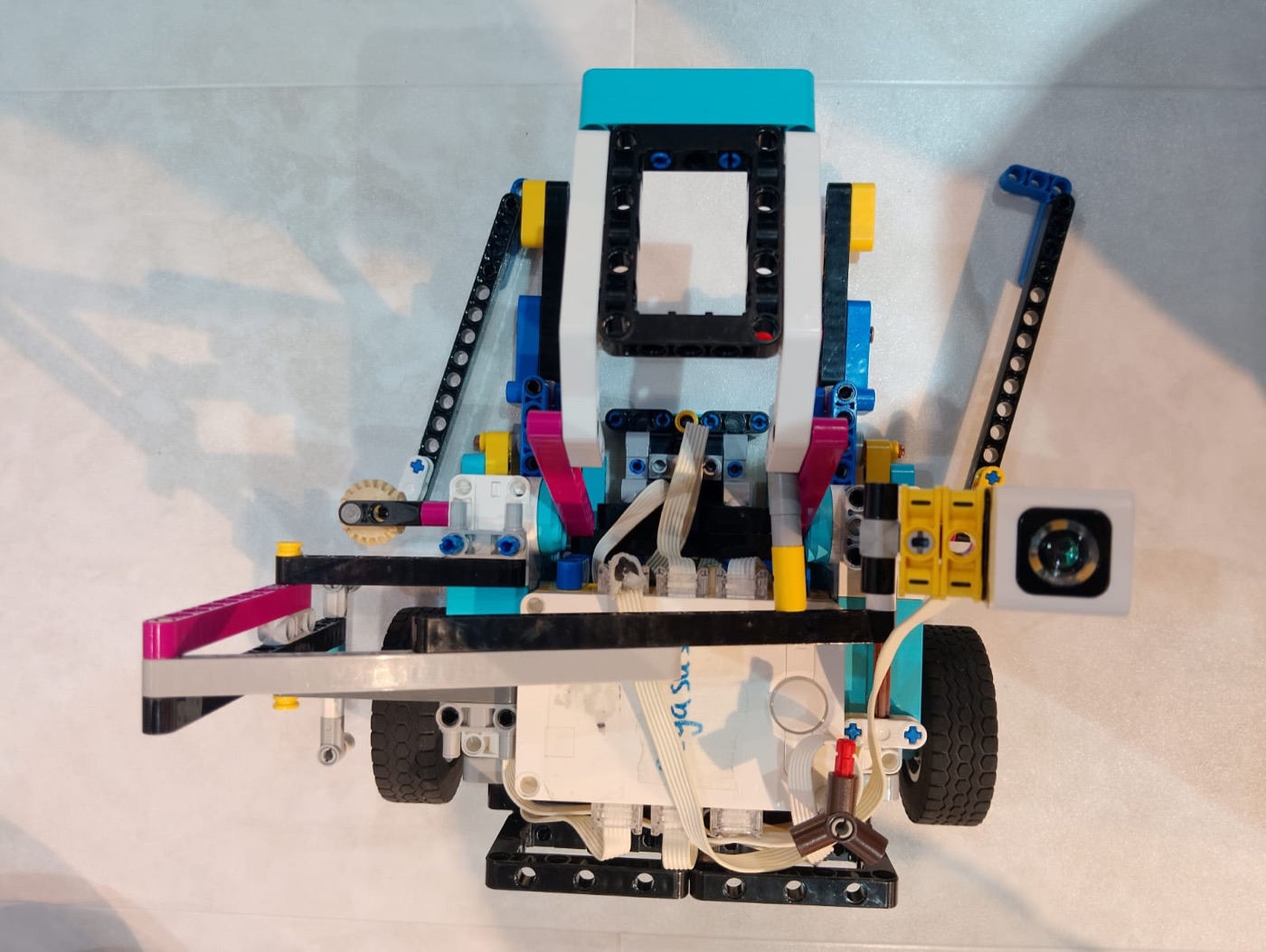
The mission: the WRO Singapore 2025 RoboMission Elementary challenge was space-themed — my robot had to collect the satellite and deliver it to the correct position across the board, accurately and within the time limit.
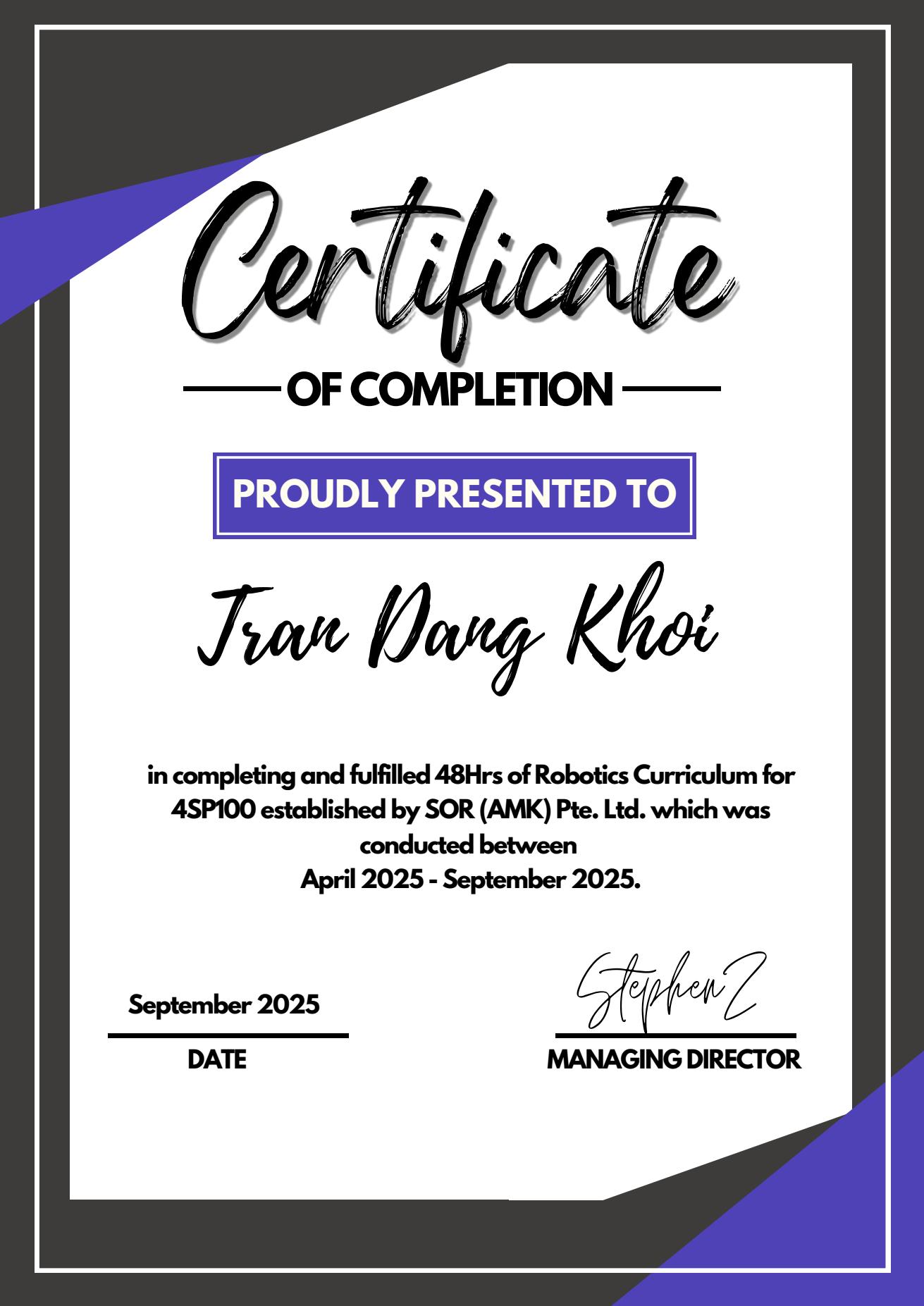
Six months of preparation: on top of my regular course, I joined a separate, dedicated WRO squad — 24 weekly 2-hour sessions (~48 hours, April–September 2025) — to prepare for this national-level RoboMission challenge.
Midway through our run, the program froze and the robot stalled during our last round of testing.
We traced the fault to the hub, swapped in a replacement, and reloaded the program. The judges granted us additional time to have a final run.
On the final run, the robot completed the mission — earning us the Bronze medal.
What I learned: staying calm and thinking step-by-step when something breaks matters as much as the code you wrote beforehand.
Team Competition
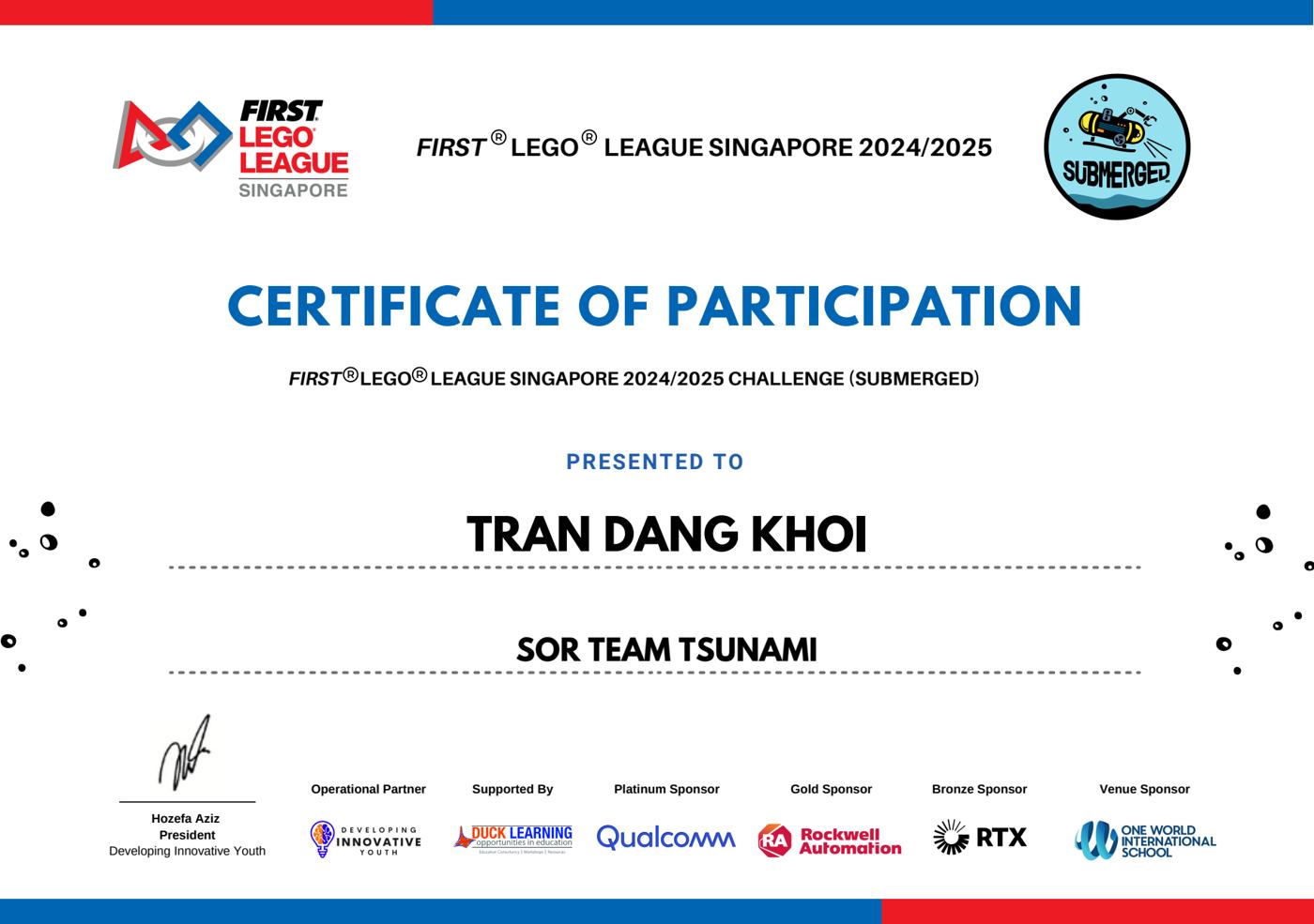 FIRST LEGO League
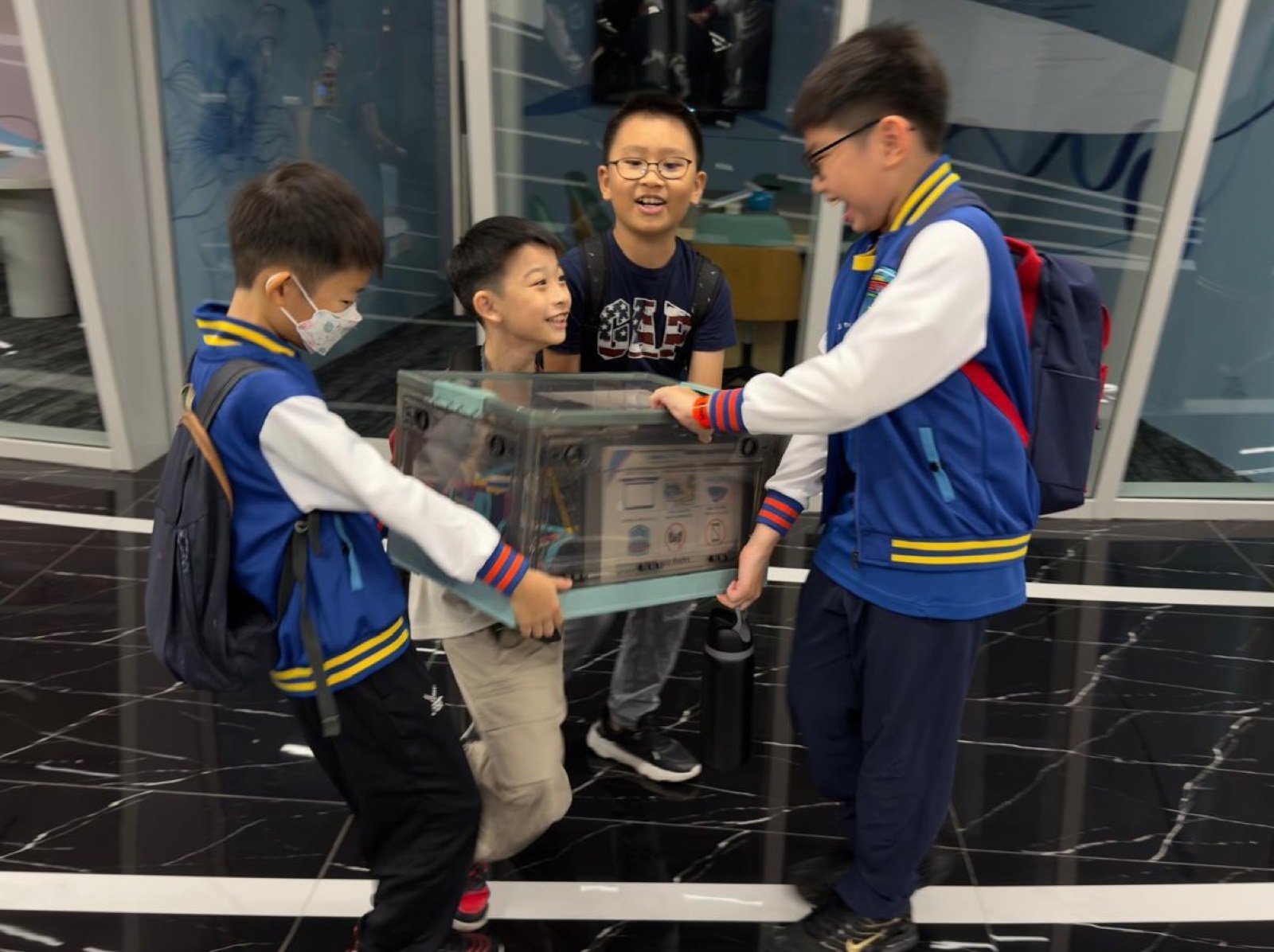
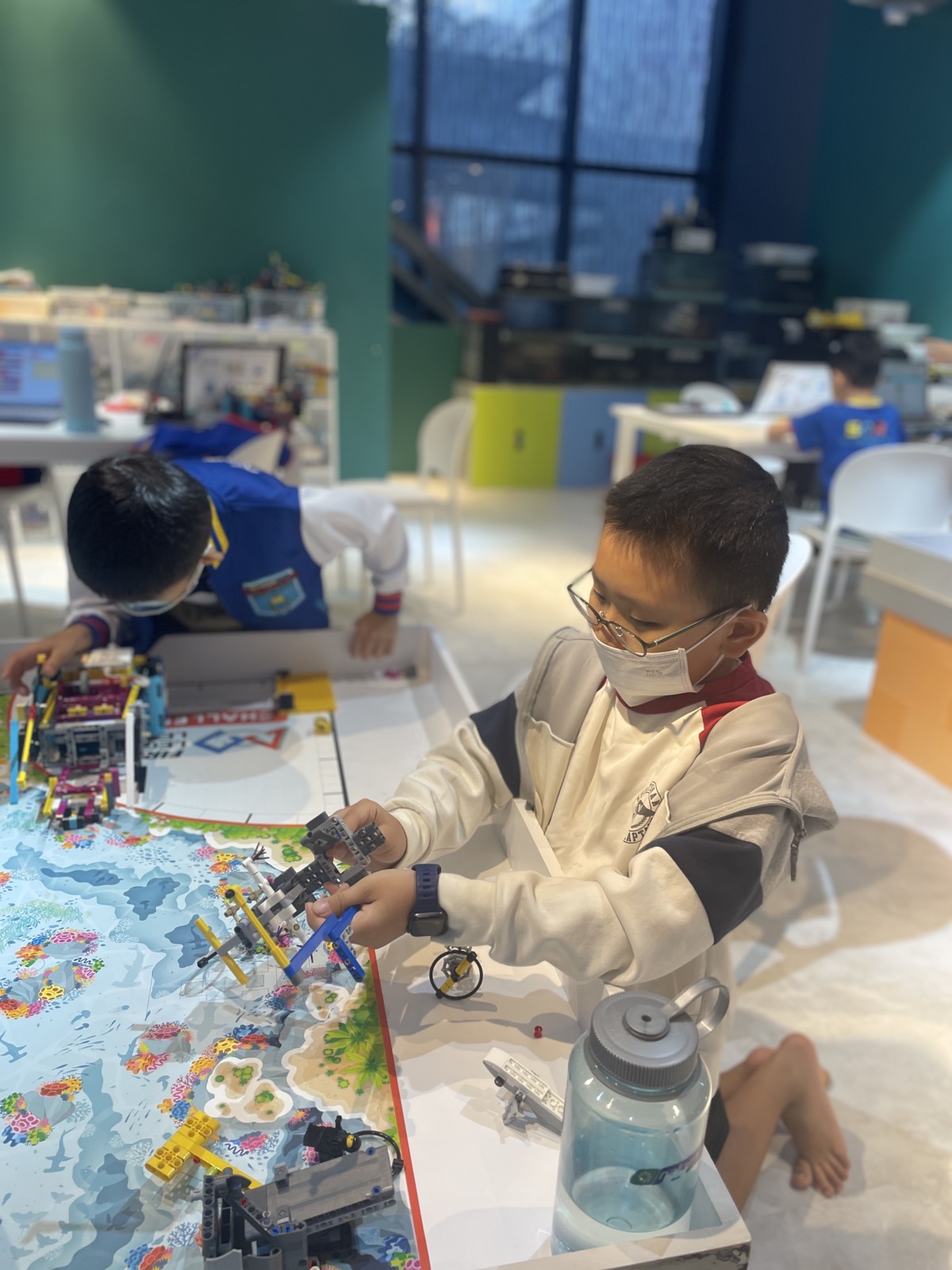
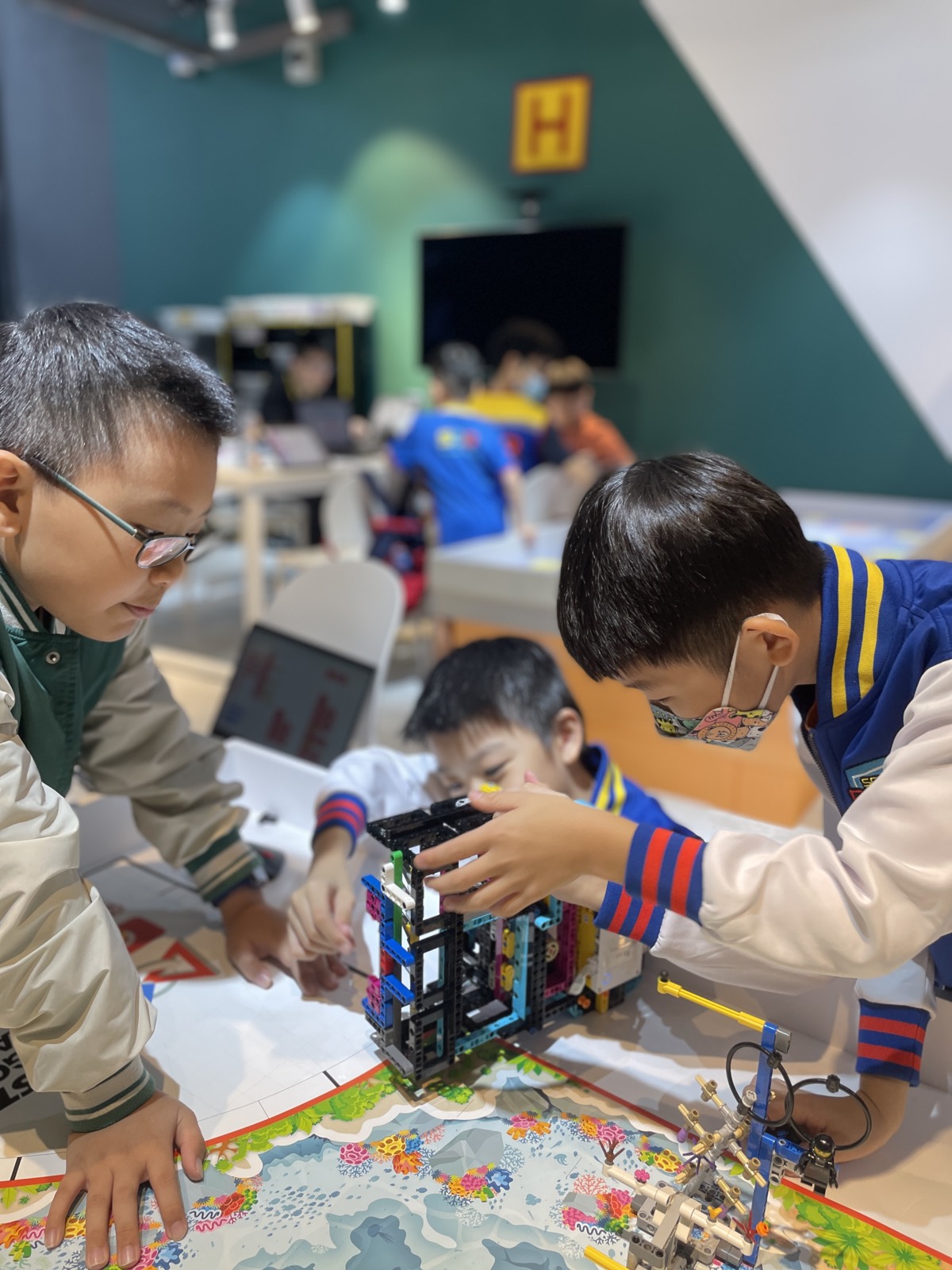
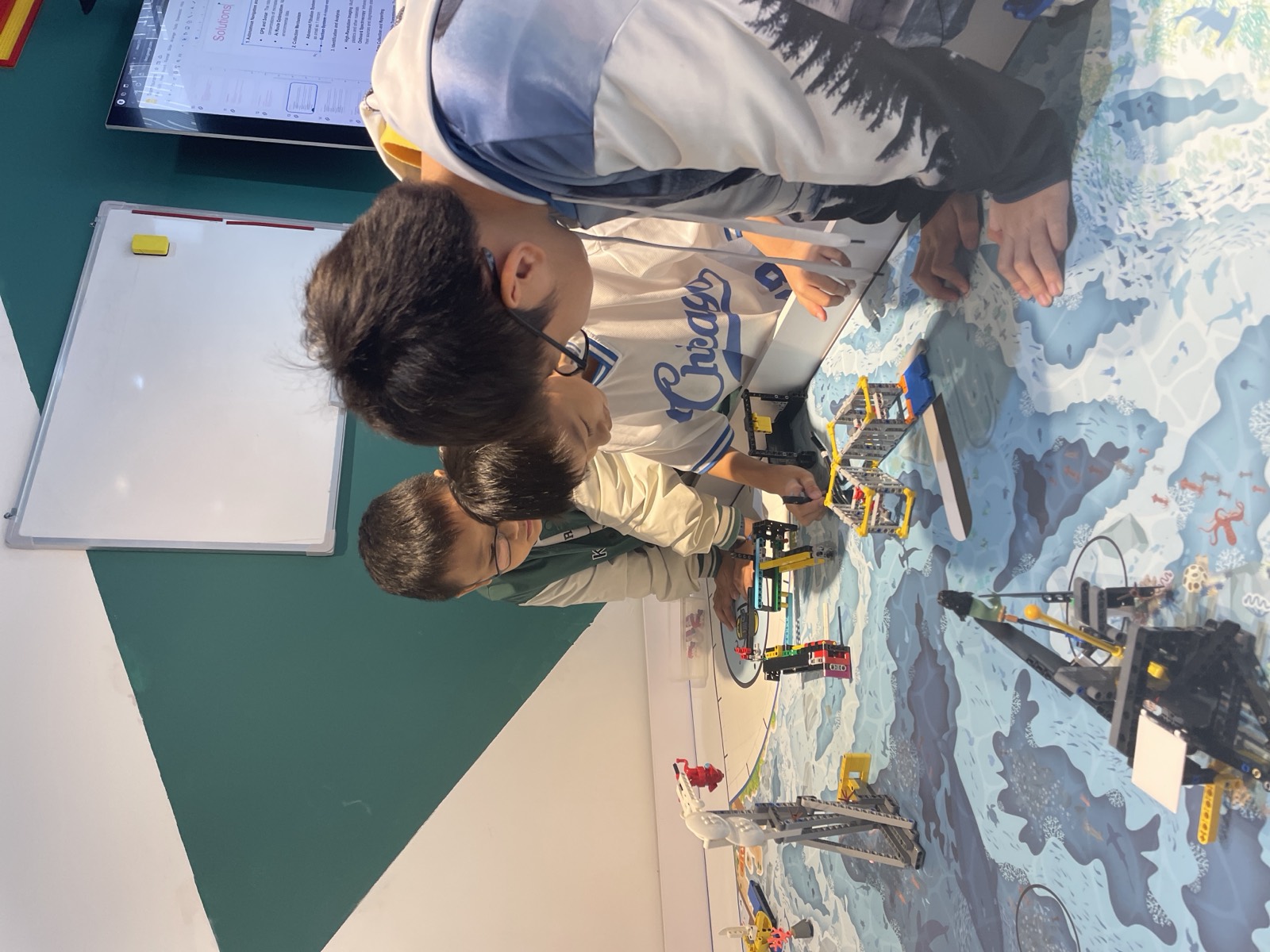
The season: SUBMERGED is FIRST LEGO League's ocean-themed challenge. As a four-member team we built and programmed a robot, completed missions on the competition table, and presented our work to the judges.
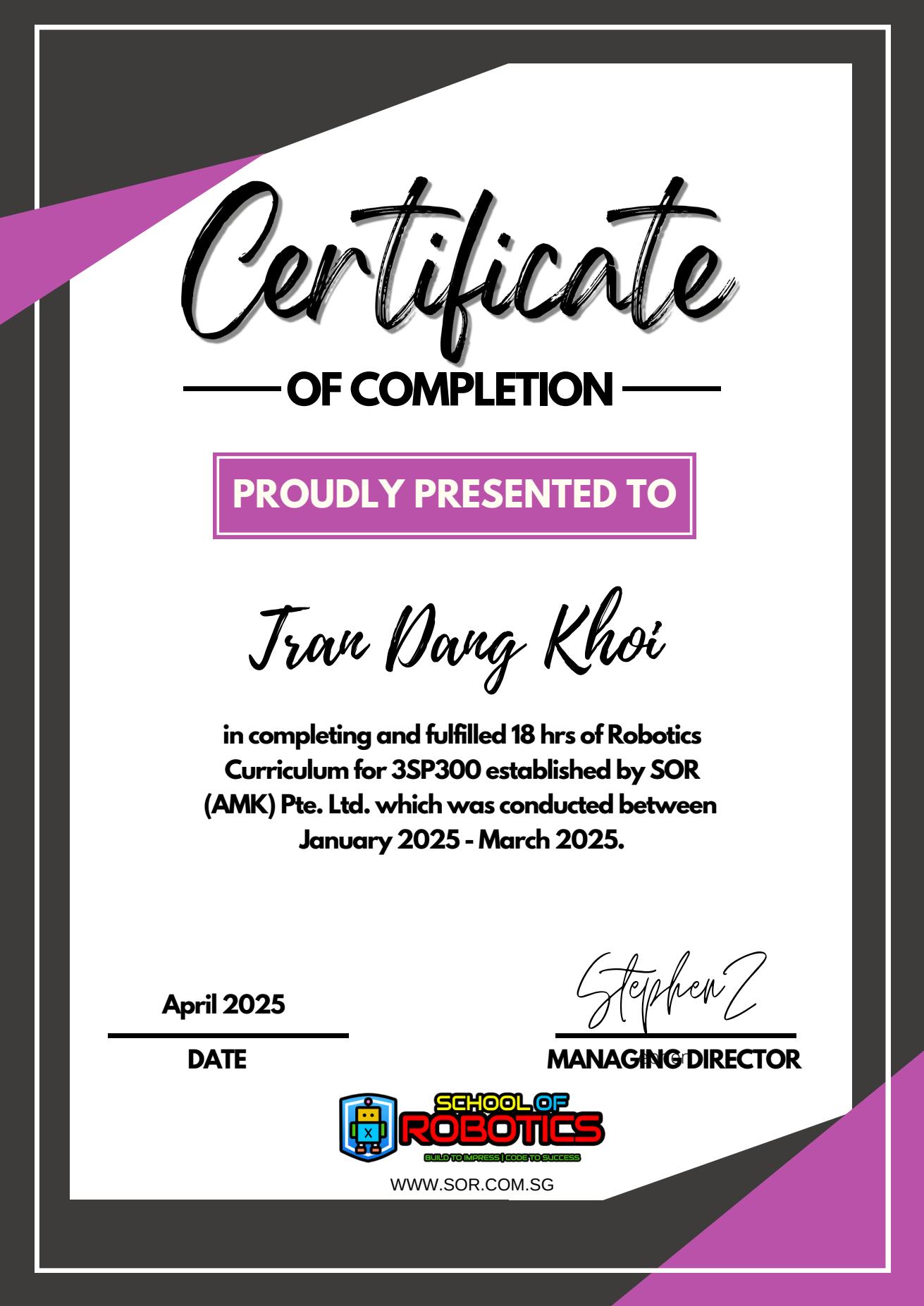
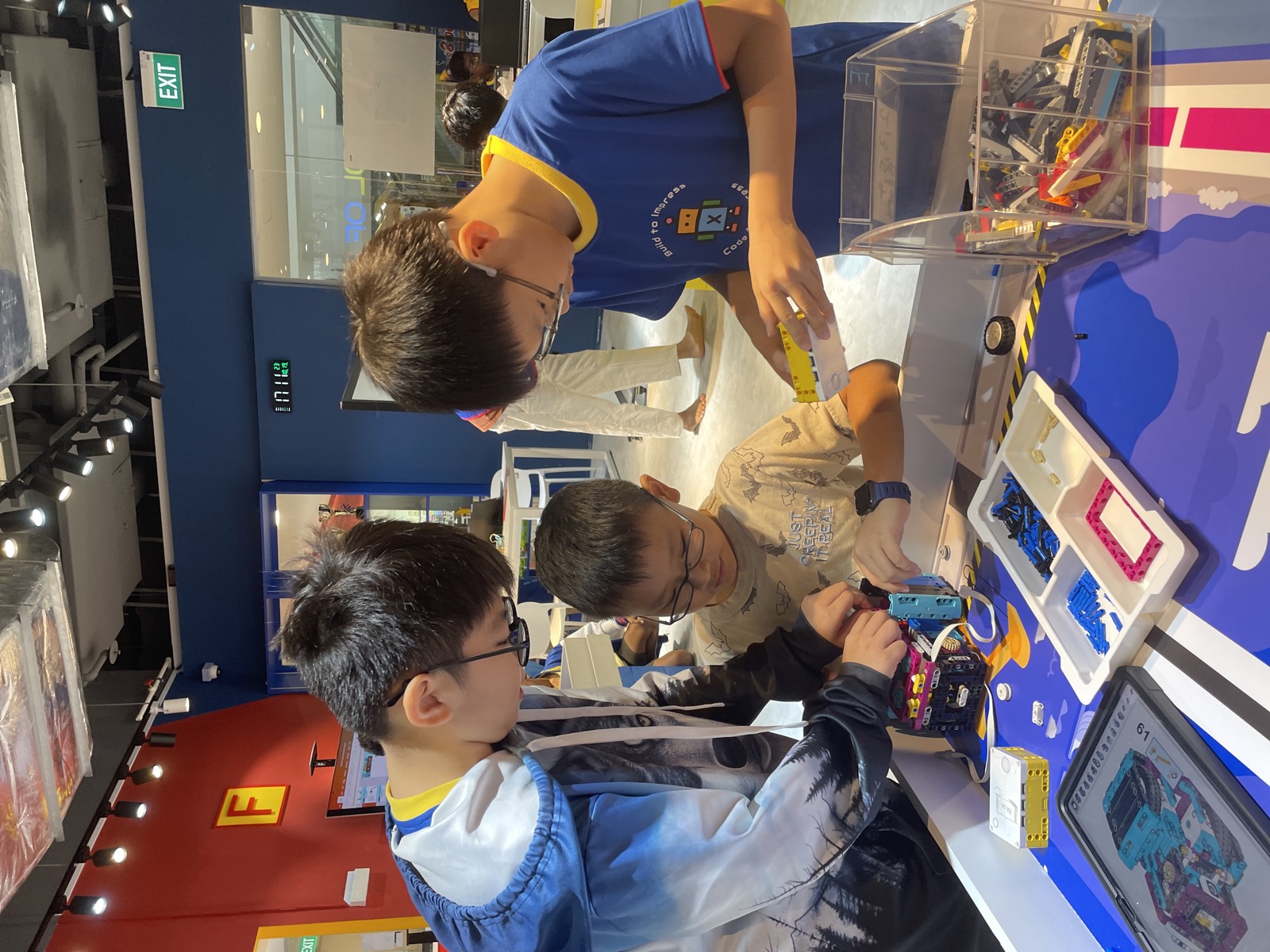
Dedicated preparation: 12 weekly FLL training sessions (October 2024 – March 2025) at the School of Robotics — covering robot design, autonomous missions, and the team research & presentation project.
Our team leader assigned each of us missions to work on. I attempted the Feed the Whale and Kraken's Treasure missions, helped build some of the robot's parts, and delivered part of our team's presentation to the judges.
The school gave us a robot base, and we built our own attachments to complete the missions. One problem was accuracy — the robot would sometimes drift off-centre. We fixed it using the gyro sensor to track the robot's exact position, so if it went off-centre it would correct itself.
The biggest thing I learned from competing as a team is how important it is to work together.
Why it matters: FLL taught me that robotics is a team sport — the build, the code and the way you explain it all have to come together.
Independent Passion Project
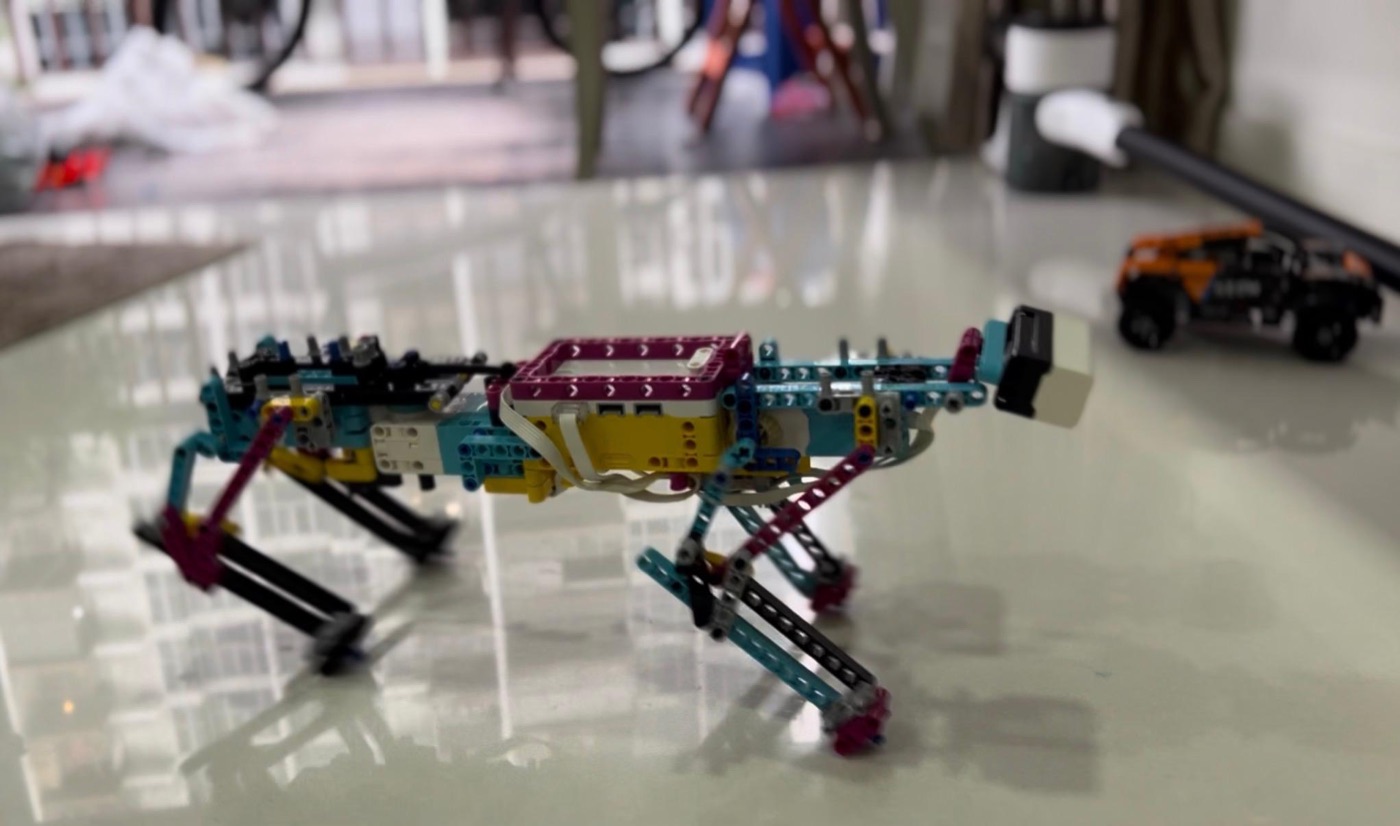
Inspired by Boston Dynamics' Spot, I set out to build my own four-legged walking robot at home. I was fascinated by how a machine could balance and walk on four legs instead of rolling on wheels.
My father and I brainstormed the leg design and how the four legs should move together. From there I programmed it myself in LEGO Spike — and instead of complex calculations, I used hands-on trial and error: adjusting each motor's movement and timing, testing, and refining until the legs worked together in a steady walk. The build and the code are mine, and I can explain how every part works.
Programming & Thinking
Built up over two years of courses and competitions — these are the concepts I use confidently.
Breaking a mission into smaller custom blocks so my code is organised and reusable.
Using variables to count and track state so behaviour depends on data, not fixed steps.
Repeat and if/else logic — "keep going until the colour sensor sees the line."
Colour, force and distance sensors for line-tracing, detection and reacting to the environment.
Using messages to trigger actions and run several parts of a program at once.
Programming a robot to follow a path and hit intersections accurately.


My Robotics Journey
My competition highlights first, then the dedicated training and courses that built up to them.
Team Pegasus, RoboMission Elementary space challenge — won Bronze after fixing a hardware failure mid-run.
Ocean-themed FLL season with Team Tsunami: robot build, missions and judge presentation.
A separate weekly WRO squad — 2-hour Saturday sessions at the School of Robotics, on top of my regular course — for intensive RoboMission preparation.
A separate FLL squad (2-hour weekly sessions) preparing for the SUBMERGED season — robot missions plus the team research & presentation project.
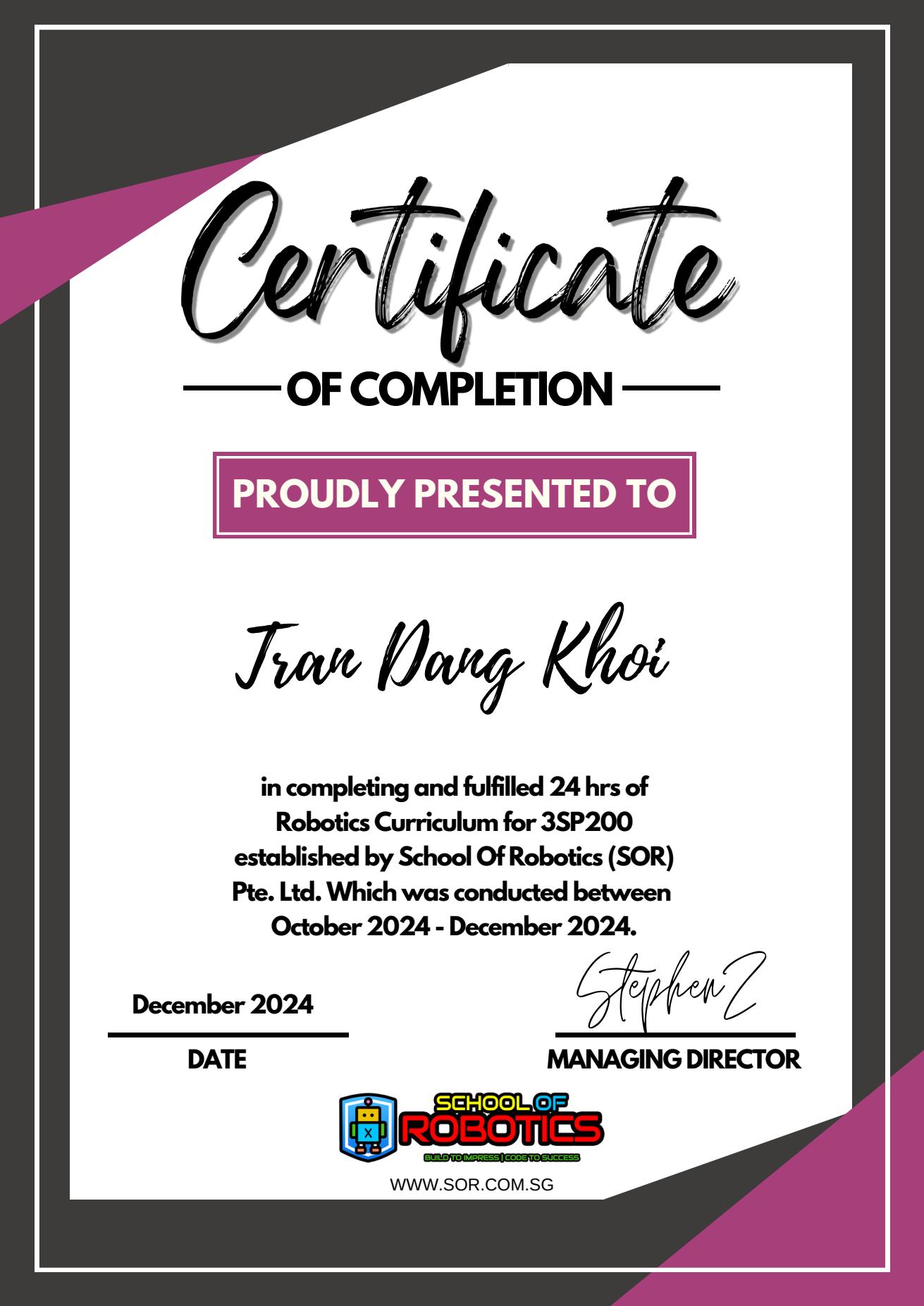
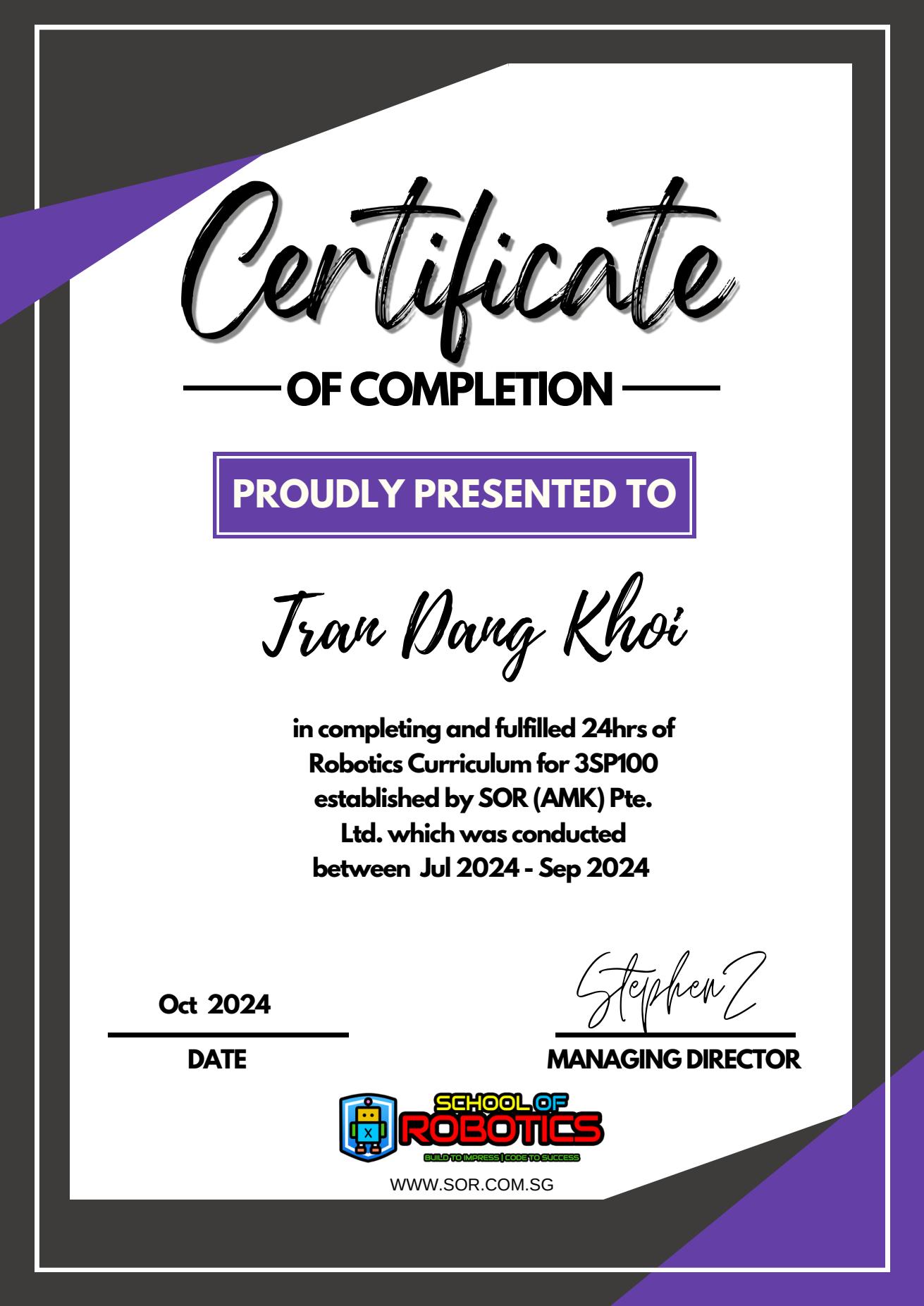
My regular Stage-4 course: FIRST LEGO League skills, cargo & sorting missions, build-your-own-robot, accident avoidance.
Line tracing, My Blocks & broadcasting, and autonomous navigation missions.
Gears, construction, flowcharts, variables & operators, advanced sensor control.
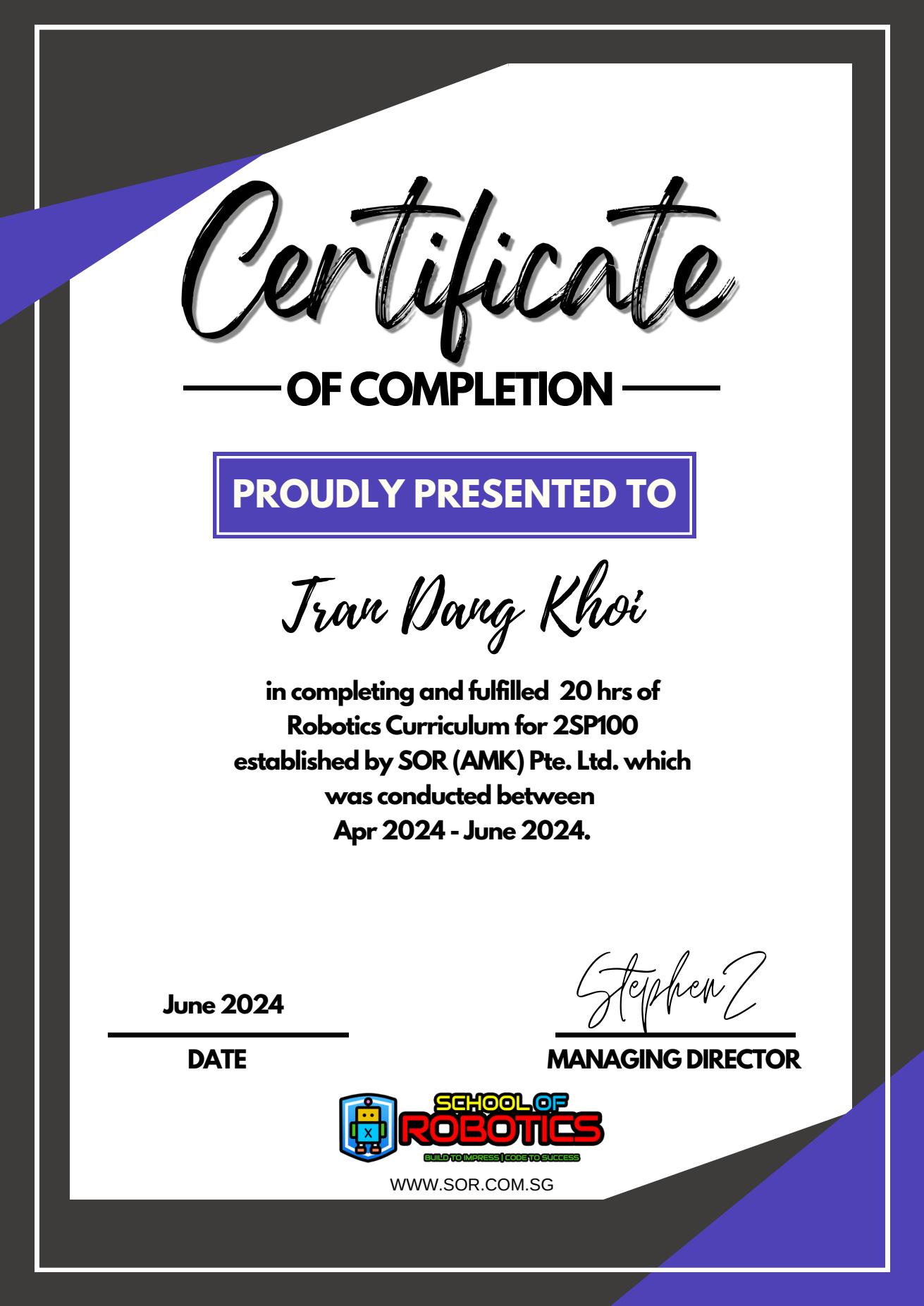
Movement, loops, force / distance / colour sensors and conditional statements.
First builds, custom claws, touch-sensor machines and my first missions.
Communication & Leadership
Weekly training in the MOE-registered Speech Excellence Programme — impromptu speaking, persuasive speech, interview skills and technical presentations.
Competed in the Qualifying Rounds (Aug 2025), delivering both a prepared and an impromptu speech in front of judges.
Delivered part of my team's FIRST LEGO League presentation to the judging panel — combining robotics knowledge with clear communication.
Awards & Recognition
Tap any image to view it full-size.
Reflection & Goals
Make my programs more reliable — testing the hub and code thoroughly before a run, so one failure can't stop the whole mission.
Move from block coding into text-based programming, and explore how AI helps robots sense, balance and make their own decisions. Boston Dynamics' robots make me curious about autonomous and humanoid robots — I want to understand the thinking behind them, not just watch them work.
I want to keep competing, keep building, and grow as both an engineer and a communicator alongside others who love to make things.
Appendix
The full list of topics I completed across 130+ hours of structured coursework at the School of Robotics (2024–2025) — with a further ~70 hours of dedicated competition training (WRO and FLL) on top. Tap a course to expand its topics.